
Dr. Abdul Basset Sayda on Welat TV: The Kurdish cause is just but requires a skilled advocate
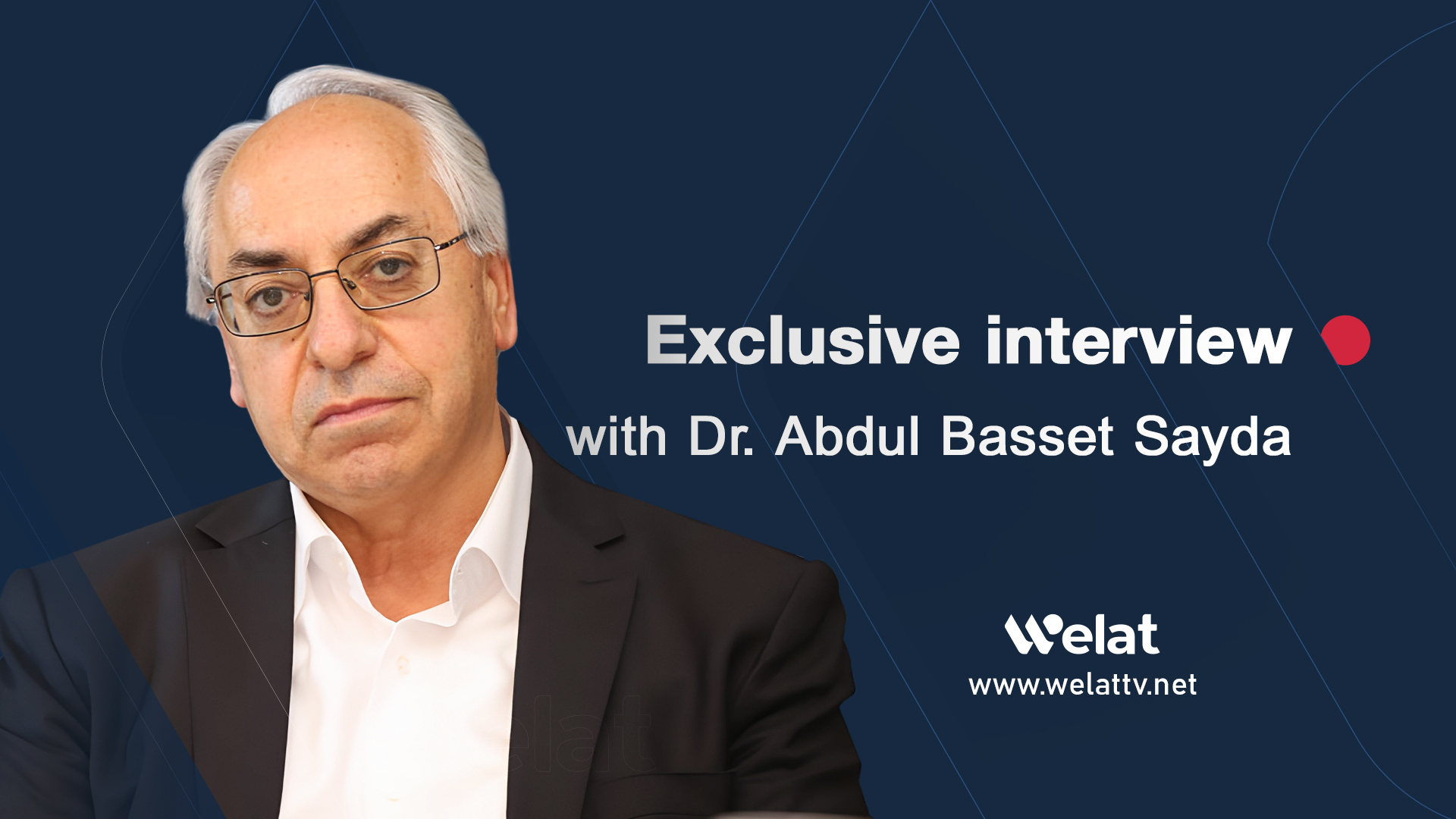
Welat TV - Erbil
Kurdish politician Dr. Abdul Basset Sayda stressed the importance of Kurds leveraging the current acceptance and moving forward with determination, strategy, knowledge, and diplomacy. He stressed the need to avoid provoking the other side and losing them as an ally who stands by their side.
"The Syrian mindset is not ready to accept federalism, and it can ask for the same concept but without using this particular term, and most Arab parties agree on extended decentralization, which is close to federalism in practice, but the term federalism itself is provocative to the other and cannot be used with it," Dr. Abdul Basset Sayda said in an interview with "Welat TV" on Saturday, 8 January 2025. He added, "If the Kurds approach with a unified logic and position and work with all honesty and transparency, they will be accepted by the new administration in Syria. This is because the Kurdish political forces today are the most cohesive and influential on the Syrian scene, unlike other groups”.
Commenting on the SDF commander's visit to Erbil and his meeting with President Barzani, Sayda stressed that this was an important step and brought hope to the Kurdish people who had long awaited it.
He stressed that President Barzani has always had a vision that transcends the boundaries of partisanship and division, a vision that includes the Kurds as a whole, and that President Barzani has long advocated for this reconciliation. "If the SDF see themselves as part of the Syrian forces, they will have a role in building Syria and the upcoming new administration," he added.
He pointed out that the peace process will start in Turkey because resolving the Kurdish issue in Turkey will be in the interest of the Kurds, Turkey, and all the countries in the region, noting that all the political forces have reached the realization that the Kurdish issue is not a game and that it is a major issue. "The old mentality of both the Turkish opposition and the government itself no longer works, because the Kurdish issue in Turkey is not linked to a specific party but has become a major national issue in Turkey, as is the case in Syria," he said.
Dr. Abdul Basset Sayda urged SDF Commander Mazloum Abdi to consider the immense sacrifices made by the Kurdish people in Syria, emphasizing the importance of ensuring that Kurds are not left out when the time comes to claim their rightful dues.
He added, "A true heroic stance is when it is taken at the right time, and this is always the essence of politics—if a stance is not taken at the right moment, it holds no value". Sayda called on the KNC to change its discourse and deal with the new situation with a new mindset. He stressed the importance of adapting to the evolving situation to effectively serve the Kurdish cause.
He concluded by saying, "If we disagree and oppose each other, and each party and leader is preoccupied with their gains, time will pass us by; no one is waiting for us, and they will not wait for us for long, and there are those who are striving to take their place, and if we achieve nothing, American patience will not remain unlimited, and no one will wait for us to come to an agreement and decide our destiny. The West, as a great power, neither feels embarrassed by us nor fears us".
The Full Interview with Dr. Abdul Basset Sayda
Welat TV: Dr. Sayda, where have you been during this time, especially with all the significant events on the scene?
Dr. Abdul Basset Sayda: You may know that I left the framework of the formal opposition following the attack on Afrin, in addition to the occurrence of many disputes during this period, such as the issue of Astana, which I did not support and there was a lot of talk at that time, and actually I have been residing in Sweden for more than 10 years, but I always hear: 'Are you still in Istanbul, aren't you tired of its hotels? Although when I was in Istanbul I did not stay in hotels. As for Damascus, there are also questions about my lack of presence there, I would say that if one is not actively engaged in events with a clear political agenda, it is better to exercise patience until the situation becomes clearer. I miss Damascus a lot, because I lived in Damascus for a long time, starting from when I joined university at 17 years old, and when I got my PhD and left Damascus I was 35 years old and then moved to Libya, and memories remain and we miss the country, and Damascus is like Amouda for me. I also miss all the cities in Syrian Kurdistan where I worked, such as Derik, Dirbasiye, Sari Kaniye, and Tel Tamr. There are some places we are attached to because of the time we spend there. "We must wait and hope as long as the brothers there carry out their duties through political institutions and organizations that are in touch with the events and monitor the developments to see where they are going However, there are significant concerns, as the issues remain tangled and complicated. We hope that the Syrian people will overcome this phase smoothly after all the suffering they have endured".
Welat TV: How many years have you not seen Damascus?
Dr. Abdul Basset Sayda: It has been more than 30 years since I have seen Damascus, Amouda, or any other Syrian city.
Welat TV: Do you remember any of the landmarks of Damascus in the past?
Dr. Abdul Basset Sayda: According to what I see in the current photos, I think Damascus has not changed much, like the Umayyad area, Marje, Sheraton, and Meridian. I know those areas that have not changed yet, but if you go to the Kurdish neighborhoods, I think there have been changes.
Welat TV: When will Dr. Abdul Basset Sayda be the next guest on Welat TV, speaking from Damascus?
Dr. Abdul Basset Sayda: I hope so, although my health situation is unstable at the moment, I am improving after overcoming a difficult period and I will try to go after the situation stabilizes in the coming period.
Welat TV: How did you see the SDF commander's visit to the Kurdistan Region and his meeting with President Barzani?
Dr. Abdul Basset Sayda: There is no doubt that it was an important step, and we have been waiting for it because many brothers have been looking for it from inside, outside, and from other parts, and they have been trying hard to bring the Kurds closer together. We did what we could, making contacts within the circumstances we are living in. "President Barzani, as we have always known, sees beyond the limits of partisanship and divisions. His vision encompasses all Kurds. I know he has wanted this reconciliation for a long time, as you know from the first and second Erbil Agreements and the Duhok Conference. Unfortunately, the other side has often been absent from these understandings." Brother Mazloum Abdi's step is positive, and it has given hope to our people. We hope that this initiative and step will continue to resolve this issue. If the SDF see themselves as part of the Syrian armed forces, they will have a role to play in the building of Syria and the upcoming new administration. Everything is still temporary and urgent, and we don’t know where things will stop. As for the Kurdish issue, let's leave aside what we see in the media and on social platforms, but I believe that there are understandings about the future of the region, and everyone is waiting for Trump's return to power and what he will do. In my opinion, the peace process will start in Turkey, because resolving the Kurdish issue in Turkey is in the interest of the Kurds and Turkey, as well as in the interest of Syria and the Kurdistan region and the region as a whole, and we hope that some pressure will be exerted here and there and that we will review our accounts to be realistic in our visions to move the issue towards a solution.
Welat TV: Do you see a solution on the horizon?
Dr. Abdul Basset Sayda: Things are happening, but sometimes we are unaware of them because there are parties that do not want them to occur and are working to sabotage them. I can say that there is great pressure in Turkey, and all political forces have concluded that the Kurdish question is not a game and that it is a major issue. I remember once when I was in Istanbul and there was a closed meeting, and the participants were from the four parts of Kurdistan, including individuals holding presidential and leadership positions. I went to the then deputy prime minister, Ahmet Davutoglu. I remember saying to him, you started the peace process, and you stopped and blamed the responsibility on the PKK, but can you deny the issue of almost 25 million Kurds in Turkey on the pretext of the PKK? What rights have you put on the table for them so that we can discuss them? As for saying that we have closed this file, this does not solve the problem. Today, even Devlet Bahchali has come to the conviction that the Kurdish question should be considered, and he is saying his vision I said before that his words are not a political initiative because a political initiative shows a party's readiness to reach a certain point, and the other party is then expected to negotiate to reach a unified path. Therefore, the old mentality, whether in the Turkish opposition or in the government itself, does not work anymore, because the Kurdish issue in Turkey is not linked to a certain party, but has become a major national issue in Turkey, as is the case in Syria. Therefore, I specifically mention Brother Mazloum when he considers the magnitude of the sacrifices made by the Kurdish people in Syria. When the time for negotiations and entitlements arrives, and everyone receives their rights while the Kurds remain outside the calculations, a great injustice will have been done to them. This is because it would have been possible to reconsider or make certain personal concessions for the benefit of the Kurdish people. A true heroic stance is when it is taken at the right moment. Politics is always like this: if you do not take a stance at the right time, it loses its meaning.
Welat TV: Coming back to the Kurdish movement, especially after the visit of President Barzani's representative to Syrian Kurdistan and the visit of SDF commander Mazloum Abdi to President Barzani, what are the demands of the Kurdish parties for the next stage?
Dr. Abdul Basset Sayda: I think the political parties that are currently on the scene, I think the Kurdish National Council should try to change its discourse because I think when they appear in the media, sometimes I see that they do not fully understand the situation, how it is unfolding, where it is going, and where it stops. I don’t want to give examples, but the significant changes that have occurred in Syria, Lebanon, and possibly in other areas like Iraq, and we don’t know where they will stop. At the end of the day, we have to deal with the new situation with a new mentality, and it is wrong to go back to the old files, and the Council itself is not enough; other forces have been formed recently because we cannot count all the parties anymore because there are so many, and they are constantly growing, despite my follow-up, but in general, there are parties that we cannot overlook, such as the Progressive Party and the Unity Party, and other parties that are old and influential. In my opinion, if they could work together and consult, it would be good, because this phase is not for a specific party; it is the issue of the entire Kurdish people in Syria.
Welat TV: There are many Arab and foreign delegations arriving in Damascus. How do you view the consequences of these visits and meetings?
Dr. Abdul Basset Sayda: I believe the purpose of these delegations is to understand Syria's role in the region for the upcoming phase. This is not surprising to me, because I remember when we formed the Kurdish National Council, we hosted such delegations, perhaps even more than them, and we met with them, as happened in Paris, for example, when the Friends of Syria Conference was held. Delegations from over 100 countries attended, including Hillary Clinton, Laurent Fabius, the French president, and many other major figures. These delegations want to understand the new administration's way of thinking, their directions, and their stances as reflected in reality because up until now, they have not been officially recognized. It is true that Turkey and some Arab countries have reopened their embassies, but has this administration gained official acceptance to represent Syria and move forward? In reality, we have not reached that stage yet. A temporary government was indeed formed, but its goals and outlines are unclear. However, it is good that it has filled the existing void and avoided the scenario of Iraq after the fall of the regime, which led to chaos. Indeed, it does not align with everyone's desires, but that is better than nothing. They promised to continue in their current position until March, but after that, will they include other Syrian components with them or not? There are many differing political views, and we hear statements rejecting power-sharing in Syria. So, if you don’t accept power-sharing, this is Syria. Those who do not see themselves as partners in the issue will not consider themselves owners of it and will regard themselves as outside the matter. This is not power-sharing; rather, justice must be achieved in this regard. Without that, it won’t work. As for domination and monopoly on the pretext of rejecting quotas and majority rule, this will not provide any solutions, and this matter needs a good review. There are calls for a national conference, but the composition of the parties to the conference is questionable, and a committee should be formed to prepare the conference. On what basis will the members be selected? I think there is a lot of work to be done, but the best step is to overthrow the old regime, and we hope that things will change for the better.
Welat TV: When the Kurds go to the new government in Damascus, what should they take with them, and what is the best demand to ask for: federalism, decentralization, self-administration, autonomy, or what?
Dr. Abdul Basset Sayda: I remember once when I was asked about this issue, I replied that the Syrian mind is not ready to accept federalism, and you can ask for the same thing but without using that particular term. The person was surprised and asked, "Don’t you want federalism for the Kurds?" I replied, "I wish for their independence, which is their natural right because all the people around us have become nations except the Kurds. It is a legitimate right for more than 50 million people, but we must deal with the situation with understanding and wisdom." I said to the participants in one of the important meetings: Those who divided us into four parts in the past were stronger than us, and today they are stronger than before, just as we are much weaker than before, and they will continue to do so, and if they do not decide for us, we will not be able to take the initiative by ourselves.
Welat TV: What is the best option for the Kurds?
Dr. Abdul Basset Sayda: I think that most Arab parties agree on an extended decentralization that is close to federalism, but the term federalism itself cannot be used, along with other rights such as the introduction of the language in education and the media, as well as social and administrative rights, all of which will be done through negotiations and discussions.
Welat TV: Will the new administration accept the Kurds' demands and agree to them?
Dr. Abdul Basset Sayda: If the Kurds approach with a unified logic and stance and work with sincerity and transparency, why not? Because the most powerful and cohesive political forces on the Syrian scene today are the Kurds, unlike the rest. The Kurds should not view the others as mere numbers, because everyone lives under one national roof. It is also possible to form alliances and build friendships with other components to create a shared future and achieve everyone's goals. Today, all parties have come to the firm conclusion that the Kurds have suffered great injustice and double oppression through racist projects such as the Arab Belt, the unfair census, exceptional laws, and many others. The Kurds were deprived of joining military and police academies and internal and external study missions, in addition to being denied even the simplest legitimate rights of citizenship. The Kurds must take advantage of the current acceptance and move forward with determination, policy, wisdom, and diplomacy, avoiding provoking the other side and losing them as a friend standing with them due to a position or a phrase that might cause their disapproval. The Kurdish issue is a just cause par excellence, but it needs a skilled lawyer.
Welat TV: Trump will be in power soon. Do you think he will make new decisions regarding the Kurds, or will he follow the path of former President Biden?
Dr. Abdul Basset Sayda: I can't really guess, and most likely he won't follow Biden's footsteps, comparing the policies of Republicans and Democrats. I think the relations between Trump and Erdogan were better than the relations with Biden, but America is a state of institutions and a democratic state, and there are strategic issues for the state at the military and intelligence levels that are not subject to the directives of the head of state, whoever he is, and he cannot change them or decide on them.
Welat TV: Do they have enough margin and suitable space to move within?
Dr. Abdul Basset Sayda: There is no doubt about that, and they can do a lot, but it is linked to the Kurdish situation. When the Kurds are united and can play a significant role within the American calculations and the new equations being proposed in the region, just as it has become possible to say that the Kurdistan Region is now part of international, not just regional, calculations and its role cannot be abandoned. If the Kurds in Syria manage to become part of that, regardless of their size and the different resources compared to the Kurdistan Region, and play an appropriate role, then Trump and others will take the Kurdish issue into consideration. The region today lies between Iraq, Israel, and Turkey, and it has a special status. The concerned parties want to be present there and have good relations in that context. But if we disagree and stand against each other, achieving nothing, the American side will not be welcoming to us. I remember at the beginning of the formation of the Kurdish National Council, I jokingly said to one of the diplomats concerned with the Syrian issue, after the demands they presented to us: "If we don't do that, what will happen to us?" She replied: "We will close your file and leave, and you will face what Somalia faced." They are major powers, and they are neither ashamed of us nor afraid of us.
Welat TV: You have a lot of political experience in Syria, are you optimistic or pessimistic about the future?
Dr. Abdul Basset Sayda: I think that the step taken by Mazloum Abdi to meet with President Barzani is hopeful, but the rest of the parties must carry out their tasks in an integrated and coordinated manner to reach a good point, and not go with a mentality of complacency and only follow others and expect gains, but if each party and leader is preoccupied with their personal gains, we will lose time, no one is waiting for us and will not wait for us for long, and there are those who are striving to take their place.
